
Mirror Lake: Predicting Perfect Conditions for Water Reflections
Learn to forecast glass-calm water for flawless reflections. Understand wind thresholds, timing patterns, and how to build rules that catch mirror conditions.
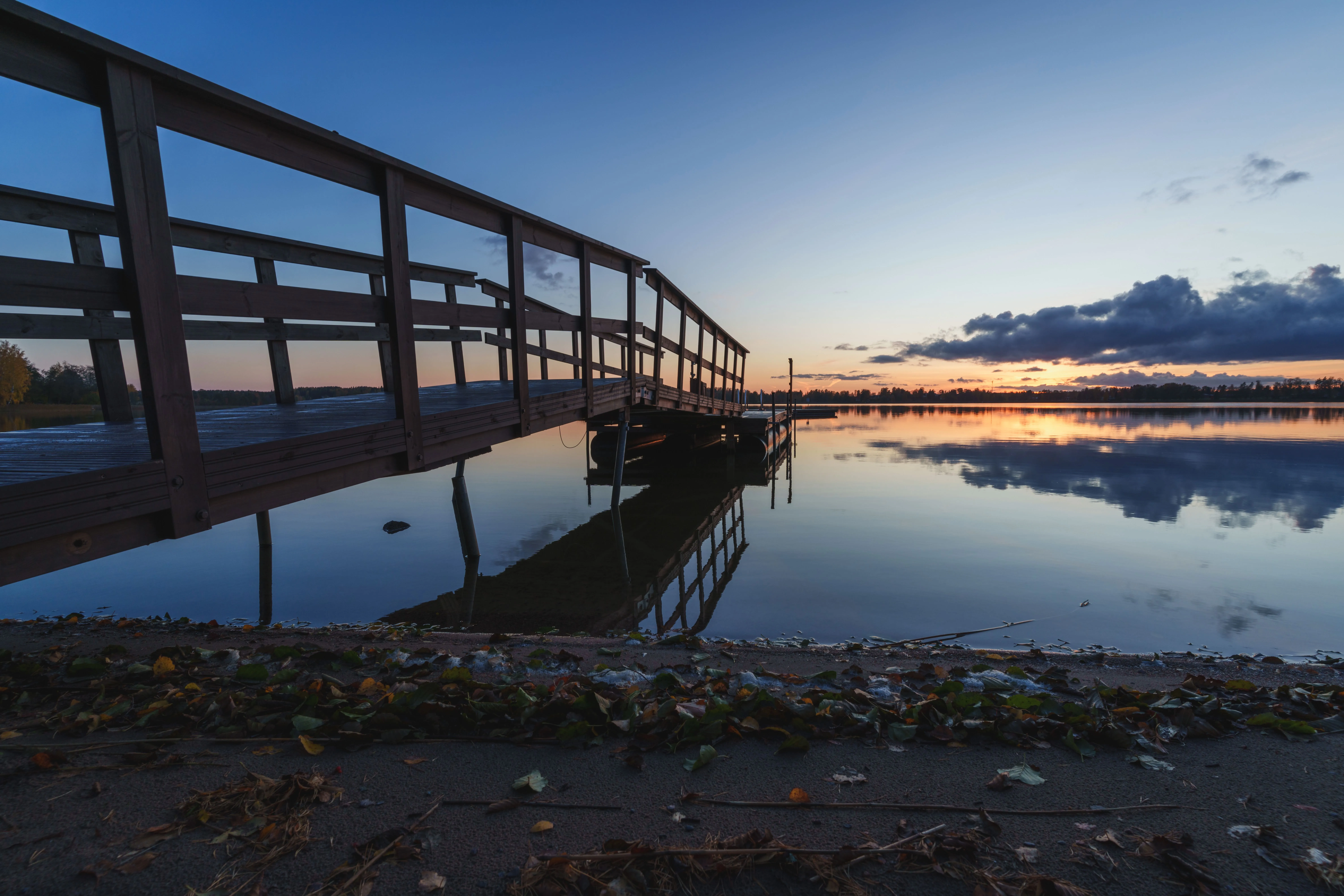
Mirror Lake: Predicting Perfect Conditions for Water Reflections
There’s something almost surreal about a perfectly still lake. The water becomes a mirror, doubling mountains and trees into a symmetrical dreamscape. These conditions transform ordinary scenes into extraordinary photographs.
The problem? They’re fleeting. A breath of wind and the mirror shatters into ripples. Miss the window by thirty minutes and you’re shooting choppy water instead of glass.
This guide explains what creates mirror-calm conditions, how to read the weather signals, and how to set up automated alerts so you never miss another reflection opportunity.
You’ll need a free PhotoWeather account to follow along with the examples.
Why Wind Is Everything
Water reflections have one enemy: wind.
Even light wind creates ripples that break up reflections. The physics are straightforward—moving air transfers energy to the water surface, creating waves. The stronger the wind, the larger the waves. But for reflection photography, even tiny ripples matter.
Here’s the practical breakdown:
| Wind Speed | Water Surface | Reflection Quality |
|---|---|---|
| < 0.5 m/s | Glass-smooth | Perfect mirror reflections |
| 0.5-1 m/s | Near-still with occasional ripples | Excellent reflections, minor distortion |
| 1-2 m/s | Light ripples | Good reflections, some texture |
| 2-3 m/s | Noticeable ripples | Partial reflections, softened details |
| > 3 m/s | Choppy surface | Reflections mostly lost |
The threshold that matters most: 1 m/s (about 3.6 km/h or 2.2 mph). Below this, you get usable reflections. Above it, quality degrades rapidly.
Wind Gusts Matter Too
Sustained wind speed tells only part of the story. A forecast might show 0.5 m/s average wind, but if gusts reach 3 m/s, those gusts will periodically destroy your reflections. You’ll be timing shots between disturbances rather than working freely.
For pristine conditions, you want both:
- Wind speed ≤ 1 m/s
- Wind gusts ≤ 2 m/s
When Calm Conditions Happen
Wind patterns follow predictable daily cycles. Understanding these patterns helps you plan shoots.
Dawn: The Golden Window
The calmest conditions typically occur around sunrise. Here’s why:
- Overnight cooling stabilizes the atmosphere. Cool air is denser and resists vertical mixing.
- No solar heating means no convection currents forming.
- Land-water temperature differences are minimized after a full night of cooling.
The result: the hour before sunrise through roughly two hours after is usually the calmest period of any day.
Dusk: The Secondary Window
Late afternoon to sunset can also produce calm conditions, though less reliably than dawn. As the sun lowers:
- Solar heating diminishes
- Convective activity subsides
- Wind speeds often drop
However, residual daytime heating and weather systems moving through can disrupt this pattern more than at dawn.
Midday: Usually Hopeless
Solar heating creates rising air currents that generate wind. Midday is almost never calm enough for perfect reflections unless weather systems have created an unusual atmospheric setup.
Water Body Size Matters
Larger bodies of water need calmer conditions. A small pond might show decent reflections at 1.5 m/s wind, while a large lake at the same wind speed will have visible chop.
Small ponds and pools (< 100m across)
- More forgiving of light wind
- Surrounding terrain often provides wind shelter
- Can work with wind up to 1.5-2 m/s
Medium lakes (100m - 1km across)
- Need genuinely calm conditions
- Wind has room to build waves across the surface
- Target wind ≤ 1 m/s
Large lakes and reservoirs (> 1km across)
- Most demanding
- Even light wind creates significant wave action
- Target wind ≤ 0.5 m/s for best results
Reading Conditions in PhotoWeather
To assess reflection potential, open the Weather Chart for your location:
- Enable Wind Speed and Wind Gusts in the chart options
- Focus on the dawn period (2 hours before to 2 hours after sunrise)
- Look for sustained periods where:
- Wind speed stays below 1-1.5 m/s
- Wind gusts stay below 2-3 m/s
The chart shows hourly forecasts, so you can identify exactly when the calmest window occurs.
Combining With Other Conditions
Mirror conditions become even more powerful when combined with atmospheric effects:
Fog over still water: The combination of calm water and fog creates ethereal scenes. Both conditions require similar setups—calm air, high humidity, temperature near dew point.
Golden hour reflections: Dawn calm naturally coincides with golden hour. When wind cooperates, you get warm light doubled in the reflection.
Mist layers: Light mist hovering over water adds depth and atmosphere while reflections remain intact below.
The Mirror Lake Template
PhotoWeather includes a built-in template designed specifically for reflection photography.
What It Monitors
The Mirror Lake template watches for:
- Wind Speed ≤ 1 m/s — Core calm requirement
- Wind Gusts ≤ 2 m/s — No sudden disturbances
- Precipitation Probability ≤ 10% — Dry conditions
- Visibility ≥ 5000m — Clear enough to see reflections
Setting It Up
- Go to Rules → Add Rule → Templates
- Find Mirror Lake under Landscape templates
- Click Create Rule
- Enable the rule for your lake/water locations
The template fires when all conditions align, notifying you before mirror conditions arrive.
Tuning for Your Needs
When creating from the template, you can adjust sensitivity:
Loose settings (more opportunities):
- Wind speed ≤ 1.5 m/s
- Wind gusts ≤ 3 m/s
- Good for smaller water bodies or when you’re flexible about slight ripples
Default settings (balanced):
- Wind speed ≤ 1 m/s
- Wind gusts ≤ 2 m/s
- Reliable mirror conditions for most lakes
Strict settings (pristine only):
- Wind speed ≤ 0.5 m/s
- Wind gusts ≤ 1 m/s
- Absolutely glass-smooth water, but fires less frequently
Start with default settings. If you’re getting too many alerts that don’t deliver perfect reflections, tighten to strict. If alerts are too rare, loosen them.
After Rain: Urban Reflection Photography
Reflections aren’t limited to natural water bodies. Wet streets, parking lots, and puddles create reflection opportunities in urban environments.
The Rain Puddle Window
After rain stops, there’s a golden window when:
- Puddles are full and undisturbed
- Wind is calm (puddles are shallow and sensitive)
- Surfaces are wet and reflective
This window typically lasts 1-4 hours depending on temperature, wind, and drainage.
The After Rain Template (Pro)
PhotoWeather’s After Rain template uses temporal operators to detect this window:
- Rain accumulation ≥ 1.5mm in last 4 hours — Recent rain created puddles
- Current rain ≤ 0.2mm — Rain has stopped or nearly stopped
- Wind ≤ 2 m/s — Calm enough for puddle reflections
- Visibility ≥ 5000m — Clear conditions returning
- Temperature ≥ 1°C — Above freezing (puddles don’t ice over)
This template requires Pro tier because it uses temporal operators (rolling sum of rainfall over time).
Building Custom Reflection Rules
The templates cover common scenarios, but you might want custom rules for specific situations.
Example: Sunrise Reflections at a Specific Lake
Combine mirror conditions with golden hour timing:
- Wind Speed ≤ 1 m/s
- Wind Gusts ≤ 2 m/s
- Time Window: sunrise-30m to sunrise+90m
This fires only when calm conditions coincide with the best light.
Example: Fog + Reflections Combo
For those ethereal misty lake shots:
- Wind Speed ≤ 1 m/s
- Wind Gusts ≤ 2 m/s
- Fog Probability ≥ 60%
- Time Window: sunrise-60m to sunrise+120m
This is demanding—both fog and calm conditions must align—but when it fires, the results are special.
Example: Any-Time Mirror Alert
If you’re flexible on timing and just want to know whenever conditions go calm:
- Wind Speed ≤ 0.5 m/s
- Wind Gusts ≤ 1.5 m/s
- Precipitation Probability ≤ 20%
No time window restriction means this can fire anytime—useful for lakes near your home where you can respond quickly.
Testing Your Rules
Use the Test against recent data feature in the rule builder to validate your settings:
- After configuring your rule, look at the test panel
- Review when the rule would have triggered recently
- Cross-reference with your memory or photos—did those times actually have good reflections?
If your area hasn’t had calm conditions recently, expect few matches. That doesn’t mean the rule is wrong—it means conditions have been windy.
Field Techniques for Better Reflection Shots
Weather is only part of the equation. Here’s how to maximize results once you’re on location.
Positioning
- Get low: Lower angles increase the reflection area in your frame
- Find foreground: Rocks, reeds, or docks breaking the water surface add depth
- Consider the sun angle: Side lighting creates dimension; backlighting creates silhouettes
Timing on Location
- Arrive before predicted calm: Set up while conditions are settling
- Watch the water surface: If you see ripples forming, shoot quickly
- Monitor wind direction: Shooting into the wind often shows more ripples than shooting with it
Dealing with Imperfect Conditions
Sometimes you arrive and conditions aren’t quite mirror-smooth:
- Wait it out: Wind often comes in pulses. Watch for calm moments.
- Seek shelter: Move to areas protected by terrain, trees, or structures
- Embrace texture: Light ripples can add interest and break up overly-symmetrical compositions
- Go long exposure: Multi-second exposures smooth out light ripples
Quick Reference
Wind Thresholds for Reflections
| Condition | Wind Speed | Wind Gusts |
|---|---|---|
| Perfect mirror | ≤ 0.5 m/s | ≤ 1 m/s |
| Excellent reflections | ≤ 1 m/s | ≤ 2 m/s |
| Usable reflections | ≤ 1.5 m/s | ≤ 3 m/s |
| Marginal | ≤ 2 m/s | ≤ 4 m/s |
Best Times
- Primary: 1 hour before sunrise to 2 hours after
- Secondary: 2 hours before sunset to 30 minutes after
- Avoid: Midday (10am - 4pm)
Template Settings
| Use Case | Wind | Gusts |
|---|---|---|
| Large lakes (strict) | ≤ 0.5 m/s | ≤ 1 m/s |
| Medium lakes (default) | ≤ 1 m/s | ≤ 2 m/s |
| Small ponds (loose) | ≤ 1.5 m/s | ≤ 3 m/s |
Frequently Asked Questions
What if wind is forecast at 1 m/s but I arrive and there are ripples?
Forecasts are estimates. Microclimates, terrain effects, and natural variability mean actual conditions can differ. If you’re seeing ripples, look for sheltered spots or wait for calmer moments between gusts.
Can I get good reflections on the ocean?
Rarely. Open ocean is almost never calm enough. Sheltered bays, harbors, and tidal pools during slack tide occasionally work, but marine environments are challenging for reflection photography.
Does water temperature matter?
Not directly for reflections, but water that’s warmer than the air can create rising mist that softens reflections. This can be a feature (atmospheric effect) or a bug (reduced clarity) depending on your creative intent.
Why did my rule fire but conditions weren’t perfect?
Weather forecasts have uncertainty. A forecast showing 0.8 m/s wind might actually be 1.5 m/s on location. Over time, you’ll learn how forecasts translate to actual conditions at your specific spots.
Get Started with PhotoWeather
Ready to catch perfect mirror conditions? Use our Mirror Lake template to get alerts when winds are calm enough for glass-smooth water reflections. The template monitors wind speed and gusts to catch those still-water windows, especially around dawn when conditions are typically calmest.
Getting Started
- Create your free account if you haven’t already
- Add your favorite lake or water body as a location
- Open Weather Chart and enable Wind Speed and Wind Gusts
- Add the Mirror Lake template to your location
- Adjust template sensitivity based on your water body size
- Wait for your first alert—then go capture that perfect reflection
The difference between a good reflection shot and a great one often comes down to timing. With automated monitoring, you’ll know exactly when to head out instead of hoping for the best.