
Winter Photography Weather Guide: Snow, Frost, Aurora, and Blue Hour
Your complete guide to winter photography conditions. Learn when to chase snow, frost, northern lights, and the magical blue hour that dominates winter days.
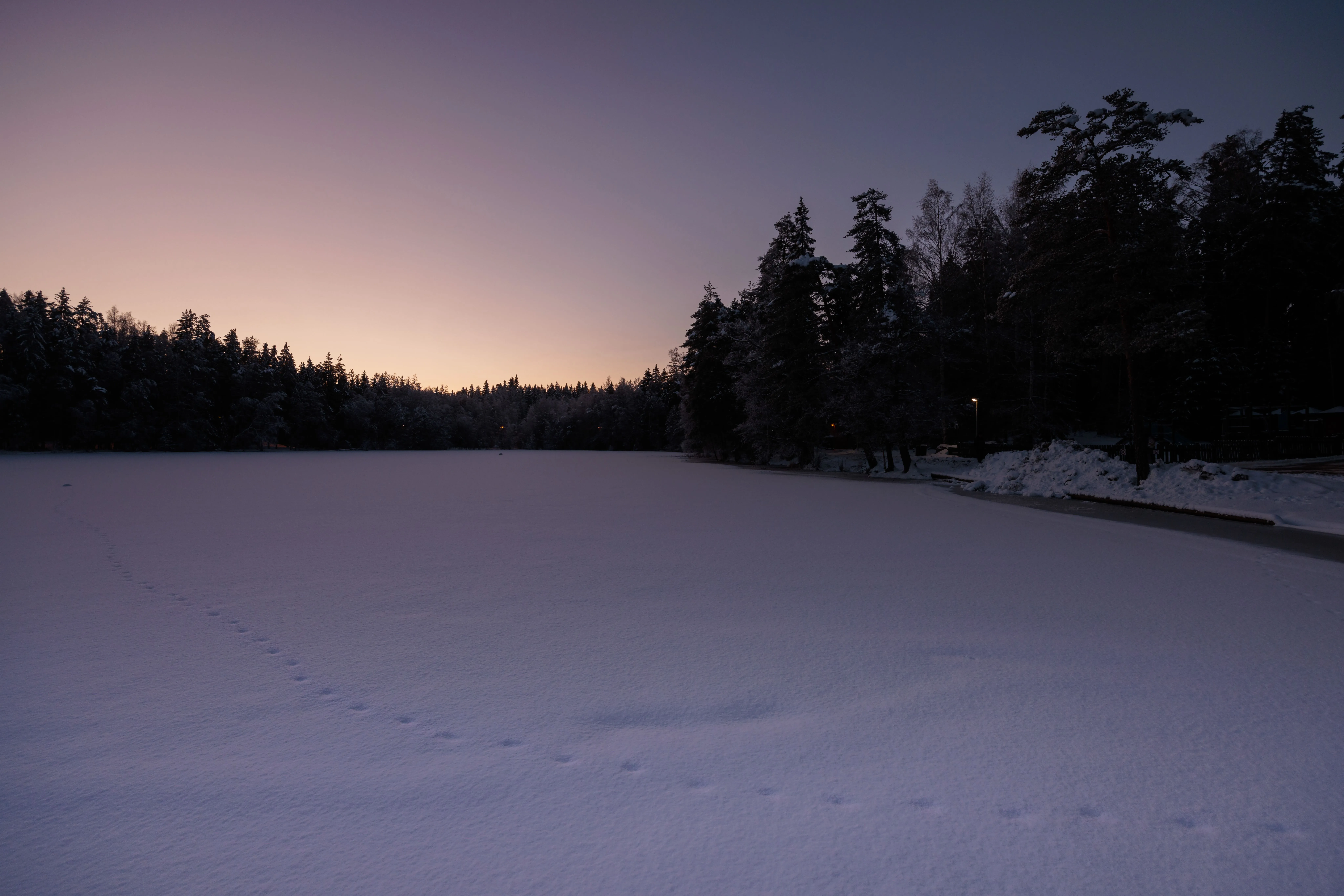
Winter Photography Weather Guide
Winter transforms the landscape into something entirely different. Snow blankets familiar scenes in white. Frost turns ordinary plants into crystal sculptures. The northern lights dance across dark skies. And the sun hangs low, painting everything in soft, golden tones even at midday.
For photographers, winter offers opportunities that simply don’t exist in other seasons. But it also demands more planning. Conditions change quickly, daylight is precious, and comfort matters when you’re standing in the cold waiting for the right moment.
This guide covers the key winter photography opportunities and how to use PhotoWeather to catch them at their best.
You’ll need a free PhotoWeather account to follow along with the examples.
The Winter Advantage: Blue Hour All Day
Here’s something many photographers don’t realize: winter’s low sun angle means golden and blue hour light lasts longer and reaches further into the day.
In summer, the sun climbs high and harsh by mid-morning. In winter, it stays close to the horizon all day. At high latitudes, the sun barely clears the trees even at noon. This means:
- Extended golden hour: The warm, directional light of golden hour can last for hours instead of minutes
- Softer shadows: Lower sun angles create longer, softer shadows throughout the day
- More shooting time: You’re not racing against a 30-minute window
The tradeoff? Shorter total daylight. In northern regions, you might only have 6-8 hours of usable light. Plan accordingly.
Blue Hour in Winter
Blue hour—that magical period of deep blue sky just before sunrise and after sunset—behaves differently in winter:
- Longer duration in autumn and spring
- Shorter but more intense in deep winter
- At extreme northern latitudes during polar night, blue hour may be the only “daylight” you get
PhotoWeather’s Blue Hour template alerts you when conditions align: clear enough skies, calm winds, and the right astronomical timing. Perfect for cityscapes where you want that deep blue balanced against warm artificial lights.
Fresh Snow: The 6-Hour Window
Fresh snow is magical. It covers imperfections, creates clean backgrounds, and reflects light beautifully. But it doesn’t last.
Within hours of snowfall stopping, the pristine surface starts to degrade:
- Wind redistributes snow, creating drifts and exposing bare patches
- Sun causes melting and crusting, even at cold temperatures
- Footprints and tracks appear from people and animals
- Trees shed their snow load as branches warm
The best window for fresh snow photography is roughly the first 6 hours after snowfall stops. After that, quality declines rapidly.
What to Look For
The ideal fresh snow conditions:
- Recent snowfall: At least a few centimeters in the last several hours
- Snowfall stopping: You want clearing, not ongoing snow
- Cold temperatures: Below freezing keeps snow from melting
- Calm winds: Less than 5 m/s prevents drifting
- Improving visibility: Clearing skies let you actually see the landscape
The Fresh Snow Template (Pro)
PhotoWeather’s Fresh Snow template uses temporal rules to detect this exact window:
- Snowfall accumulation of 5+ cm in the last 6 hours
- Current snowfall slowing to near zero
- Temperature staying below freezing
- Visibility improving
- Winds calm enough to preserve the snow
This template requires Pro because it uses temporal operators to detect the “just stopped snowing” pattern.
For Free Users
You can still track snow conditions without temporal rules:
- Watch the Snowfall and Snow Depth fields in your weather chart
- Create a simple rule for snow depth above your threshold
- Check forecasts manually for the “clearing after snow” pattern
Frost Photography: Crystal Mornings
Frost transforms ordinary scenes into intricate crystalline landscapes. Spider webs become jewelry. Grass becomes a forest of ice needles. Leaves develop feathery white edges.
These conditions are perfect for both landscape and macro photography—but they’re fleeting. Once the sun hits, frost starts melting within minutes.
How Frost Forms
Frost forms when:
- Surface temperature drops below freezing (ground is often 2-4°C colder than air)
- Humidity is high (moisture available to crystallize)
- Skies are clear (allows radiative cooling overnight)
- Winds are calm (prevents mixing that disrupts formation)
The result: clear, cold, calm nights produce frost-covered mornings.
Reading the Signals
PhotoWeather tracks several indicators that predict frost:
Frost Probability: Our derived condition that combines temperature, humidity, wind, and cloud cover into a single percentage. Above 60% means frost is likely. Above 75% means very likely.
Dewpoint Spread: When the gap between air temperature and dew point is small (under 3°C) and temperatures are near freezing, frost formation becomes probable.
Surface Temperature: Ground temperature is often colder than air temperature. When surface temps drop below 0°C on a humid, calm night, expect frost.
The Morning Frost Template
PhotoWeather includes a Morning Dew Drops template designed for dew and frost photography:
- Time window: 45 minutes before sunrise to 90 minutes after
- Frost probability above 60%, OR
- Dewpoint spread under 3°C with humidity above 85%
This catches both frost mornings and heavy dew mornings—both excellent for macro photography.
Timing Your Frost Shoot
- Arrive before sunrise: The best frost is untouched frost
- Work quickly: Once sun hits, you have maybe 30-60 minutes before melting starts
- Start in shade: Shaded areas preserve frost longer
- Watch for sun creep: As the sun rises, frost melts in predictable patterns—sometimes this creates interesting half-frost compositions
Northern Lights: Winter’s Crown Jewel
Winter is prime aurora season. Long dark nights mean more potential viewing hours, and the clear, cold air often provides excellent visibility.
What Creates Aurora
Solar wind particles hit Earth’s magnetic field and get funneled toward the poles. When they collide with our atmosphere, they create those dancing curtains of light. Stronger solar activity pushes the aurora further from the poles, making it visible at lower latitudes.
The Kp Index
Aurora strength is measured by the Kp index (0-9). What Kp you need depends entirely on your latitude:
| Your Location | Latitude | Kp Needed |
|---|---|---|
| Northern Norway, Iceland | 65-70°N | Kp 1-2 |
| Southern Scandinavia, Scotland | 55-65°N | Kp 3-4 |
| Northern US/Canada border | 50-55°N | Kp 5-6 |
| Central Europe, northern US | 45-50°N | Kp 7+ |
At higher latitudes, aurora is common. At lower latitudes, you’re waiting for major geomagnetic storms.
Beyond Kp: Aurora Quality
Raw Kp tells you about geomagnetic activity, but not whether you’ll actually see anything. PhotoWeather’s Aurora Quality score combines:
- Aurora activity adjusted for your latitude
- Cloud cover (clouds block the view)
- Darkness (aurora needs dark skies)
- Visibility (atmospheric clarity)
A quality score of 70%+ means conditions are genuinely good for aurora photography. Below 50%, you’re gambling.
Where Aurora Appears
Aurora can appear in two ways:
- On the horizon: Lower activity pushes aurora to the northern horizon. You’ll see it low in the sky. Plan compositions with interesting foregrounds.
- Overhead: Strong activity brings aurora directly above you. These are the spectacular displays. Point your camera straight up.
PhotoWeather tells you which type to expect based on your latitude and current activity levels.
The Aurora Template
The Aurora Borealis Hunt template watches for:
- Aurora quality above your threshold (default 50%, adjust based on how selective you want to be)
- Moon illumination below 40% (bright moonlight washes out aurora)
- Or moon below the horizon
Best Aurora Months
- September-October: Equinox activity peak, still reasonable temperatures
- November-January: Longest nights, but brutally cold at high latitudes
- February-March: Second equinox peak, longer nights than autumn
Peak activity is typically 10 PM to 2 AM, but aurora can appear anytime it’s dark enough.
Winter Wonderland: Snow Landscapes
Sometimes you don’t need fresh snow—you just need snow on the ground with decent conditions for shooting.
The Winter Wonderland Template
This template catches good winter landscape conditions:
- Snow depth: Enough snow to create that winter feel
- Temperature: Cold enough to keep snow from melting
- Visibility: Clear enough to see the landscape
- Wind: Calm enough for sharp images and comfortable shooting
- Precipitation: Not actively snowing (or only lightly)
Adjust snow depth thresholds based on your region. A few centimeters transforms the landscape in some areas; others need deep snow to look properly “winter.”
Combining Winter Conditions
The most magical winter shots often combine multiple conditions:
Snow + Fog: Ethereal, mysterious scenes. Snow-covered trees emerging from mist.
Snow + Golden Hour: Warm light on white snow creates incredible color contrast.
Snow + Frost: Fresh frost on top of snow adds extra texture and sparkle.
Snow + Blue Hour: Deep blue sky with white snow—classic winter color palette.
Build custom rules that combine these elements for your ideal conditions.
Practical Winter Shooting Tips
Weather conditions are only part of the equation. Here’s what else to consider:
Protect Your Gear
- Batteries drain fast in cold: Carry spares in an inside pocket to keep them warm
- Condensation is the enemy: When moving from cold to warm, put your camera in a sealed bag to prevent moisture condensation
- Snow on lenses: Carry lens cloths and check frequently
- Tripod leg locks: Can freeze in extreme cold—check before relying on them
Protect Yourself
- Layer effectively: You’ll be standing still, which gets cold fast
- Warm boots matter more than warm jackets: Cold feet end shoots early
- Hand warmers: Keep them in gloves and near spare batteries
- Know your limits: Frostbite is real. Check apparent temperature, not just actual temperature
Exposure Challenges
- Snow fools meters: Camera meters see all that white and underexpose. Add +1 to +2 stops compensation
- Histogram is your friend: Check it frequently. Snow should be bright but not blown out
- Bracketing helps: Exposure latitude in winter scenes is tricky. Bracket for safety
The Light Changes Fast
Winter’s low sun angle means light quality changes rapidly. A location that’s perfect at 9 AM might be completely different at 10 AM. Scout in advance when possible, and stay flexible.
Setting Up Winter Alerts
Here’s a practical approach to winter photography alerts:
Start with Templates
- Fresh Snow (Pro): Catches the golden window after snowfall
- Morning Dew Drops: Catches frost mornings
- Aurora Borealis Hunt: Monitors northern lights potential
- Blue Hour: Catches clear twilight conditions
- Winter Wonderland: General snow landscape conditions
Adjust for Your Region
- Heavy snow regions: Raise snow depth thresholds
- Mild winter regions: Lower thresholds, focus on frost
- High latitudes: Aurora rules can be looser; you’ll have more opportunities
- Lower latitudes: Tighten aurora thresholds to only alert on strong storms
Consider Your Commitment Level
- Casual: Use looser thresholds, get more alerts, cherry-pick the convenient ones
- Dedicated: Use tighter thresholds, fewer alerts, but higher-quality opportunities
- Obsessed: Multiple rules at different thresholds, never miss anything
Quick Reference
Key Winter Thresholds
| Condition | Good | Excellent |
|---|---|---|
| Frost probability | 60%+ | 75%+ |
| Snow depth (varies by region) | 5-10cm | 20cm+ |
| Fresh snowfall (6hr) | 3cm+ | 5cm+ |
| Aurora quality | 50%+ | 70%+ |
| Wind for frost/snow | < 5 m/s | < 2 m/s |
| Temperature for snow preservation | < 0°C | < -5°C |
Best Timing
| Opportunity | When |
|---|---|
| Frost | Sunrise to ~1 hour after |
| Fresh snow | First 6 hours after snowfall stops |
| Aurora | 10 PM - 2 AM (anytime dark) |
| Blue hour | 30-45 min after sunset / before sunrise |
| Winter landscapes | All day (low sun angle) |
Winter Templates in PhotoWeather
| Template | Tier | Best For |
|---|---|---|
| Morning Dew Drops | Free | Frost and dew |
| Winter Wonderland | Free | Snow landscapes |
| Blue Hour | Free | Twilight cityscapes |
| Aurora Borealis Hunt | Free | Northern lights |
| Fresh Snow | Pro | Just-stopped-snowing moments |
Get Started with PhotoWeather
Ready to capture winter’s magic? Use our Winter Wonderland template to get alerts when snow depth, temperature, visibility, and wind conditions align for beautiful winter landscape photography. The template helps you catch those perfect winter days when everything comes together.
Getting Started
- Create your free account if you haven’t already
- Add locations where you shoot in winter
- Enable the Morning Dew Drops template for frost alerts
- Enable the Aurora Borealis Hunt template if you’re at a latitude where aurora is possible
- Watch the weather charts for snow and adjust alerts based on your first few experiences
- Consider Pro if you want the Fresh Snow temporal detection
Winter photography rewards preparation. With the right alerts in place, you’ll catch conditions that others sleep through—literally. Some of the best winter shots happen at dawn when everyone else is still in bed.
Bundle up and get out there.