
Directional Weather Intelligence: How PhotoWeather Sees the Whole Sky
A deep dive into how PhotoWeather samples weather at 24 points around your location to predict golden hour, rainbows, and fiery sunsets with unprecedented accuracy.
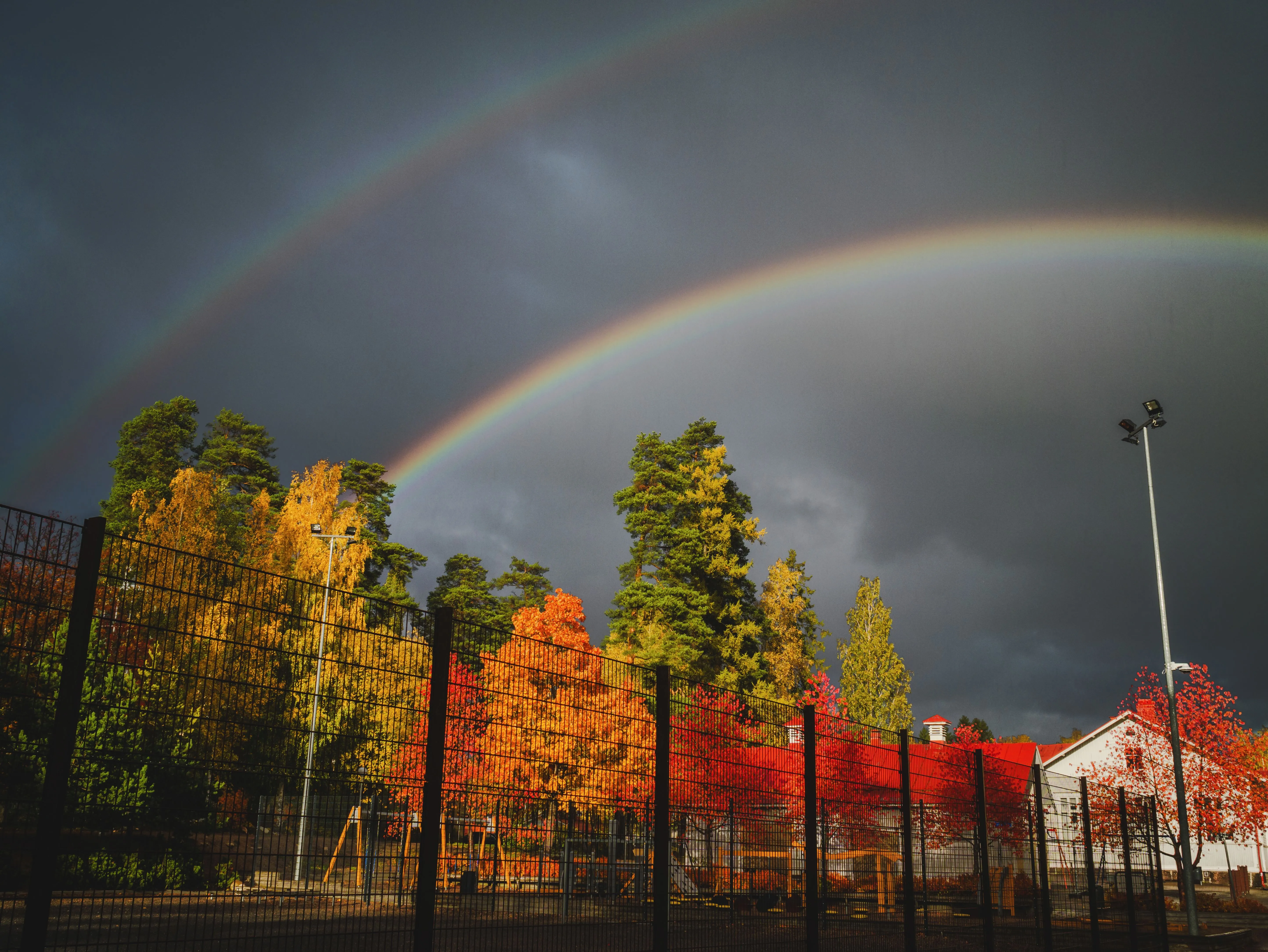
Directional Weather Intelligence: How PhotoWeather Sees the Whole Sky
Traditional weather forecasts tell you what’s happening at a single point. But photography doesn’t work that way. A rainbow needs rain in one direction and sun in another. A fiery sunset needs clear skies where the sun is setting but clouds opposite to catch the light. Golden hour depends on what’s sitting at the horizon, not what’s overhead.
This is why I built Directional Weather Intelligence. It’s part of what makes PhotoWeather fundamentally different from any other weather app for photographers, and it’s available now for Pro subscribers.
The Problem: Single-Point Blindness
Most weather services give you a forecast for one location. Temperature, cloud cover, precipitation—all sampled at your exact position.
This creates a fundamental problem for photography forecasting:
Rainbow detection fails. A rainbow forms when rain falls in the direction opposite the sun while the sun shines on you from behind. If rain is happening 30 km east while you’re dry under clear western skies, a single-point forecast sees neither the rain (too far away) nor the opportunity (rainbow conditions perfect). You miss the shot.
Golden hour predictions miss horizon conditions. What matters for golden hour isn’t the cloud cover directly overhead. It’s whether the horizon is clear in the direction of the setting sun. Low clouds at the horizon block the warm light. A single-point forecast can’t distinguish between clouds high above you versus clouds sitting at the horizon in the sun’s path.
Fiery sunset forecasts are unreliable. The most dramatic red skies happen when the horizon toward the sun is clear (so sunlight can penetrate) but clouds exist in the opposite direction to catch and reflect that light. This requires understanding atmospheric conditions in two completely different directions simultaneously.
Single-point weather data simply cannot model these phenomena. So I built something that can.
How Directional Weather Intelligence Works
Instead of checking weather at one location, PhotoWeather samples atmospheric conditions at 24 points arranged in a ring around your location. The system uses 8 compass directions (N, NE, E, SE, S, SW, W, NW) at 3 distance rings (25 km, 50 km, and 100 km from your position).
For each point, the system captures:
- Cloud cover (total, low, mid, and high layers)
- Visibility
- Precipitation (rain, showers)
- Humidity
- Sunshine duration
This creates a spatial map of atmospheric conditions extending in every direction from where you’re standing.
Understanding Where the Sun Is
The real intelligence comes from how the system uses this data. For each hour in the forecast, PhotoWeather calculates where the sun will be and divides the sky into two critical zones:
Toward the sun: The direction where the sun is setting or rising, typically spanning about 45-60 degrees. This is where we need clear conditions for golden hour, and where clouds would block fiery sunsets.
Away from the sun: The opposite direction, spanning about 60-120 degrees. This is where rain creates rainbows, and where clouds catch red light during dramatic sunsets.
Each weather condition uses these zones differently based on the physics of what creates that phenomenon.
Condition-Specific Intelligence
Rainbow Probability
Rainbows require a specific geometry: sun behind you (at the right angle), rain in front of you. Traditional forecasts can’t detect this because they don’t know where the rain is relative to the sun.
With directional intelligence, PhotoWeather:
- Checks points in the direction away from the sun (where the rainbow would appear)
- Looks for active precipitation in that zone
- Checks points toward the sun
- Confirms clear conditions and sunshine in the sun’s direction
- Combines both assessments to generate a probability score
The result: dramatically fewer false positives. In testing, directional rainbow detection reduced false alerts by approximately 70% compared to single-point analysis.
Golden Hour Potential
Golden hour quality depends almost entirely on horizon conditions. A clear sky overhead means nothing if thick clouds sit at the horizon blocking the warm, low-angle light.
Directional intelligence scores golden hour by:
- Checking points in the direction of the setting or rising sun
- Heavily penalizing low cloud cover in that zone (blocks golden light)
- Rewarding high clouds (adds texture without blocking)
- Assessing visibility (clearer air means warmer, more saturated golden tones)
- Checking humidity (moderate humidity enhances golden color)
This means PhotoWeather can distinguish between “clouds overhead but clear horizon” (potentially excellent) and “clear overhead but clouds at horizon” (poor golden hour).
Fiery Red Sky Potential
The most dramatic sunsets happen when:
- The horizon toward the sun is clear (sun can penetrate)
- Mid and high clouds exist in the opposite direction (to catch the light)
Directional intelligence scores both zones separately:
Toward the sun: Penalizes low clouds (they block the sun’s light from penetrating), rewards clear conditions and good visibility.
Away from the sun: Rewards high and mid-level clouds (they catch and reflect the red light), considers humidity for color saturation.
The final score weighs the sun’s direction more heavily (it’s the critical constraint) while still rewarding good cloud placement on the opposite side.
Golden Clouds Potential
Similar to fiery red sky, golden clouds require the right cloud placement relative to the sun. Directional intelligence evaluates:
- Mid-level clouds (most dramatic for golden illumination)
- Low clouds (foreground interest)
- Visibility (affects cloud illumination quality)
Both directions relative to the sun are scored and combined.
How It All Comes Together
Fresh Data Throughout the Day
PhotoWeather continuously updates directional analysis as new forecast data becomes available using global forecast models that are updated four times per day.
Smart Score Blending
Directional scores don’t replace the standard weather analysis—they enhance it. The system blends directional insights with traditional single-point data, giving more weight to directional analysis for conditions where it matters most (like rainbows).
This means you get the best of both approaches: the reliability of traditional forecasting enhanced by spatial awareness that understands what’s happening at the horizon.
Why This Matters for Your Photography
Fewer False Alerts
The biggest practical impact is reliability. When PhotoWeather says “rainbow likely,” the conditions are actually aligned for rainbow formation—not just “there’s rain somewhere in the forecast.”
More Actionable Predictions
Instead of vague “partly cloudy sunset” predictions, you get intelligence about what’s happening at the horizon in the direction that matters. This helps you decide whether to head out or stay home.
Works Automatically
Every rule you create that uses rainbow probability, golden hour potential, fiery red sky potential, or golden clouds potential automatically benefits from directional intelligence. No configuration needed. The enhancement is seamless and transparent.
Getting Started with Pro
Directional Weather Intelligence is available now for all Pro subscribers. There’s nothing to configure or enable. If you have Pro and you’re using any of these conditions:
- Rainbow probability
- Golden hour potential
- Fiery red sky potential
- Golden clouds potential
Your forecasts are already enhanced with directional analysis.
Ready to upgrade?
Start your Pro subscription and get immediate access to:
- Directional weather intelligence
- Consensus confidence from multiple weather models
- Hourly forecast updates
- 14-day planning horizon
- 15 locations and 100 rules
- Full access to aerosol, coastal, and upper-air data layers
Every serious weather photography opportunity, detected with the spatial awareness that single-point forecasts can’t match.
Questions?
If you’re curious about how directional intelligence works for a specific condition or want to share results from your shoots, reach out at support@photoweather.app. I’d love to hear how it’s working for you.
Happy shooting, Pontus