
Inside the Weather Engine: How PhotoWeather Predicts Photography Conditions
PhotoWeather is more than a forecast wrapper. Here's how multi-model blending, derived conditions, and ensemble confidence come together to predict photography weather.
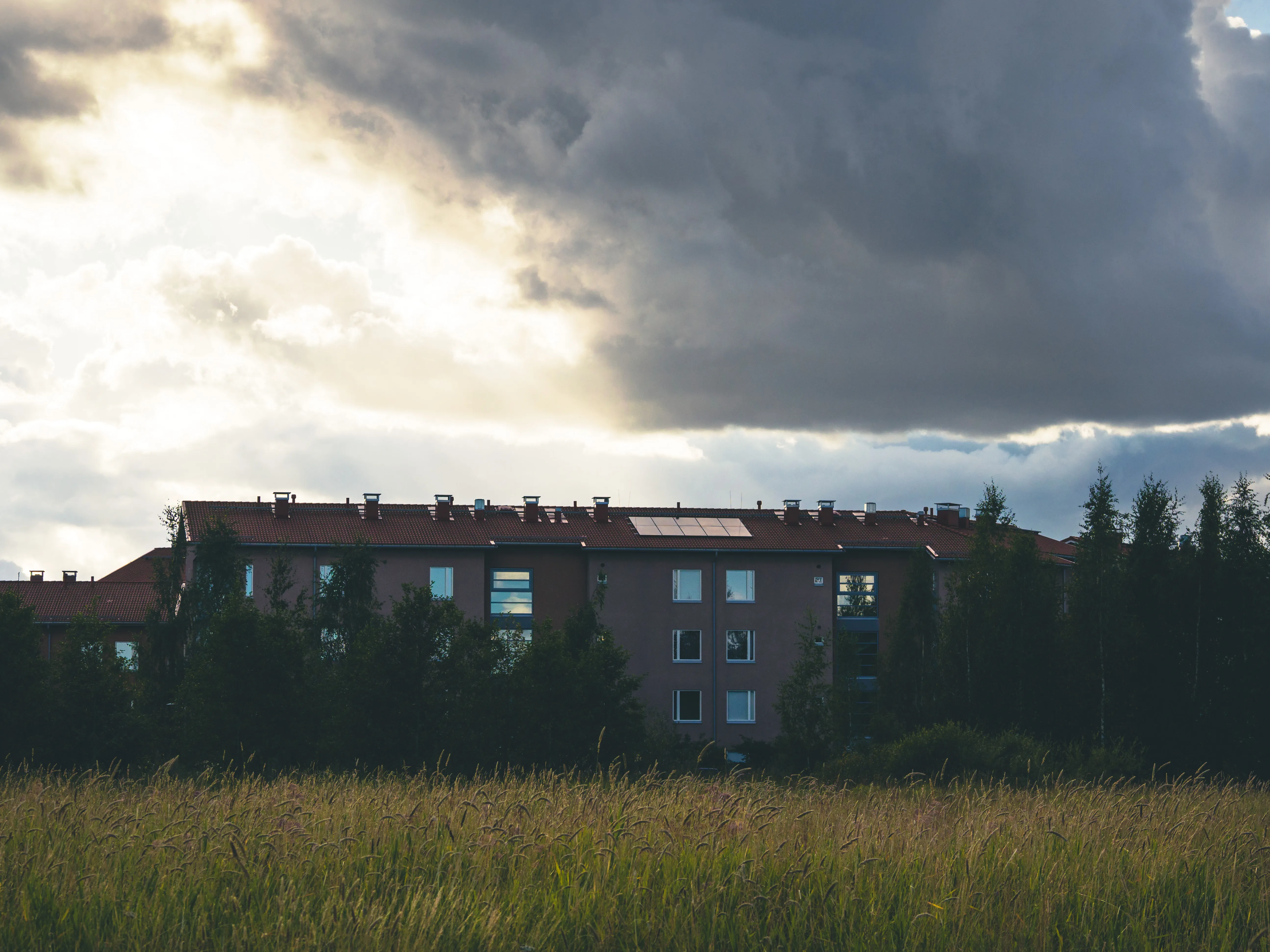
Inside the Weather Engine: How PhotoWeather Predicts Photography Conditions
If you have ever opened a weather app, seen a partly cloudy icon, and thought “but will the sunset actually light up?” — you already understand the problem.
Most weather forecasts are built for commutes, not cameras. They tell you whether to carry an umbrella. They do not tell you whether the clouds are positioned to catch golden light, whether fog will form at dawn, or whether a rainbow has any real chance of appearing.
PhotoWeather exists because photography forecasting is a different problem from general weather forecasting. It requires different data, different models, and a different way of thinking about what a forecast actually means.
This is how the engine works.
Photography forecasting is not “will it rain?”
A generic forecast answers binary questions. Rain or no rain. Warm or cold. Cloudy or clear.
Photography questions are almost never binary.
- A cloudy sky can be a disaster or a masterpiece, depending on which clouds, at what altitude, in which direction.
- Fog is invisible to most weather apps until it is already there, because they do not look for the conditions that create it.
- A sunset forecast that says “clear” can still fail if the horizon is blocked, and a forecast that says “cloudy” can produce spectacular color if the geometry is right.
Photography forecasting is about context and composition, not just temperature and precipitation. That means the underlying system has to think in images, not just numbers.
More than an API wrapper
One common assumption is that PhotoWeather just pulls data from a public weather API and puts a photography label on it.
That is not what happens.
The app runs its own multi-layer forecasting pipeline that fetches, blends, and interprets data from many independent sources. The raw inputs come from meteorological agencies around the world — ECMWF in Europe, NOAA in the United States, DWD in Germany, MET Norway, the UK Met Office, and others — but the interpretation layer is built specifically for photographers.
Think of it like the difference between buying raw ingredients and eating at a restaurant. The ingredients come from the same farms, but what matters is what the kitchen does with them.
The multi-model architecture: why one forecast is never enough
PhotoWeather does not rely on a single weather model. It uses a layered model stack that adapts to your location.
At the foundation sits the best available forecast from Open-Meteo, which automatically selects the highest-resolution operational model for your coordinates. Open-Meteo handles the heavy lifting of choosing between regional models — whether that is DWD ICON over Central Europe, HARMONIE over Scandinavia, the UK Met Office Unified Model over the British Isles, or high-resolution NEMS over North America — based on what actually covers your location. This gives you the most accurate base forecast available without relying on a single global model everywhere.
On top of that base, PhotoWeather adds specialized layers that standard forecasts rarely include:
- NOAA GFS upper-air dynamics for storm structure, wind shear, and vertical motion
- GEFS ensemble data for cloud confidence and forecast uncertainty
- CAMS aerosol data for atmospheric clarity, dust, smoke, and haze
- NOAA GFS Wave and marine forecasts for coastal photography
The system blends these layers into a single coherent picture. A forecast for Helsinki draws on different base models than one for Arizona, because the available regional models and dominant weather processes are different. But in both cases, the foundation is the best-resolution model Open-Meteo can provide for that exact spot, not a one-size-fits-all global model.
This matters because no single model is best everywhere. Global models like ECMWF IFS excel at large-scale patterns but miss small features. Regional high-resolution models see local detail — valley fog, coastal wind shifts, terrain-driven showers — but their quality varies by geography. By letting Open-Meteo select the optimal base model for each location, then supplementing it with specialized global layers for aerosols, ensemble confidence, and marine conditions, PhotoWeather gets the strengths of each while smoothing out individual weaknesses.
Derived conditions: translating weather into photography
Raw weather variables — temperature, humidity, wind speed, cloud cover percentages — do not mean much to a photographer until they are translated into something visual.
PhotoWeather’s derived conditions are where that translation happens. Each one is a custom algorithm that looks at many variables together and produces a single score: how likely is this specific photography opportunity?
Here is what goes into a few of them.
Fog Probability
Fog is notoriously hard to forecast because it forms from subtle interactions between moisture, temperature, wind, and surface cooling. A forecast that only looks at visibility will miss fog that has not formed yet, and it will also flag haze and smoke as fog when they are not.
The fog algorithm takes a moisture-first approach. It combines relative humidity, dewpoint spread, vapour pressure deficit, wind speed, solar elevation, and ensemble clear-sky probability to score how strongly the atmosphere is setting up for fog formation. It also distinguishes between different fog types — radiation fog after clear nights, post-rain ground mist, persistent advection fog, marine-layer coastal fog — because each forms through a different process and behaves differently for photography.
Fiery Red Sky Potential
A colorful sunset is not just about clouds. It is about geometry. The algorithm checks whether the sun has a clear opening near the horizon, whether mid or high clouds are positioned to catch the light, whether low clouds are blocking the view, and whether aerosols in the air will enhance or dull the color. It even uses ensemble metrics to gauge how uncertain the cloud forecast is.
Golden Hour Potential
Good golden hour light depends on horizon conditions, not just overhead skies. The algorithm evaluates low, mid, and high cloud cover separately, along with visibility and humidity, to score whether the atmosphere will let warm, low-angle light through. For Pro users, it also checks conditions specifically toward the sun, because a clear horizon in that direction is what actually matters.
Cloud Drama Score
This one looks for photogenic cloud structure, not just cloud amount. It evaluates cloud layering, atmospheric instability, vertical motion, and wind patterns to distinguish between flat gray overcast and dynamic, textured skies worth shooting.
Rainbow Probability
Rainbows require a precise geometric setup: sun behind you, rain in front of you, and the sun low enough in the sky. The algorithm models this by looking at solar elevation, shower activity, and cloud placement in the directions where the rainbow would actually appear.
Each derived condition is built around the physics of what creates the phenomenon, not just correlated variables. That is why they tend to be more reliable than guessing from raw forecast numbers.
How often forecasts update — and why timing matters
A forecast is only as good as its freshness.
PhotoWeather updates on a tiered schedule:
- Free users get refreshed data every 6 hours. That is enough for planning a day or two ahead.
- Pro users get hourly updates for the core local forecast, plus specialized layers refreshing every 6 hours.
Why the difference? Because weather models themselves run on fixed schedules. Global models typically update every 6 or 12 hours. Regional models update more frequently. The high-resolution layers that power storm tracking and cloud detail run several times per day.
PhotoWeather fetches new model output as it becomes available, not on an arbitrary timer. A Pro user checking at 07:05 may see a noticeably different forecast than one from 06:55, because a fresh model run just landed.
This matters for photography because conditions can shift. A fog signal that looked marginal at midnight may firm up by 5 AM as new data comes in. A storm forecast that looked dramatic two days out may soften as the model gets a better read on atmospheric steering.
The takeaway: for important shoots, check more than once. The forecast you saw yesterday evening is not the same forecast you will see this morning.
Ensemble confidence: what the models agree on
Every weather model is an approximation. Each one solves the same physics equations with slightly different methods, grid resolutions, and initial conditions. When two independent models agree, the forecast is usually more trustworthy. When they diverge, uncertainty is higher.
PhotoWeather uses two kinds of ensemble confidence.
Model agreement confidence
The system fetches a second forecast from a different model family and compares it to the primary forecast. If both models predict similar cloud cover, visibility, and precipitation, confidence goes up. If one model shows clear skies while the other shows thick cloud, confidence drops.
This cross-check is especially useful for photography conditions that depend on precise cloud placement — golden hour, fiery sunsets, rainbows — because small differences in cloud forecasts can mean the difference between a great shoot and a wasted trip.
Ensemble cloud confidence
For cloud-related opportunities, the system also uses the GEFS ensemble, which runs the same model many times with slightly different starting conditions. This produces a probability distribution: how likely is clear sky? How wide is the spread of possible outcomes?
A forecast with high clear-sky probability and low spread means the models are fairly certain. A forecast with low probability and high spread means the atmosphere could go either way.
How confidence scores work
PhotoWeather turns all of this into practical High, Medium, and Low confidence labels.
- Margin: How comfortably does the forecast clear your rule? A fog alert with visibility forecast at 200 m when your threshold is 1000 m is stronger than one barely sneaking under.
- Temporal stability: Does the opportunity hold steady, or does it flicker in and out across the window? Steady conditions are easier to trust.
- Temporal distance: A forecast for tomorrow morning is more reliable than one for next weekend. Confidence naturally decays with time.
- Model agreement: When available, agreement between independent models boosts confidence. Disagreement reduces it.
The result is not a guarantee. It is a planning signal. High confidence means you can commit. Medium means stay flexible. Low means the setup is interesting but fragile.
Directional Weather Intelligence: checking the part of the sky that matters
Here is a fact most weather apps ignore: the weather that matters for your photograph is often not happening directly above you.
A rainbow needs rain in one direction and sun in another. A fiery sunset needs clear skies toward the sun and clouds in the opposite direction. Golden hour depends on the horizon, not the sky overhead.
Directional Weather Intelligence is PhotoWeather’s way of handling this. Instead of looking at a single point, the system samples conditions at multiple points around your location — across the full compass and at different distances — to understand what is happening in the part of the sky that actually affects your shot.
For golden hour, it checks cloud cover specifically toward the sun. For rainbows, it looks for showers in the antisolar direction while confirming sunshine behind you. For fiery sunsets, it evaluates whether clouds are positioned to catch light from a clear solar corridor.
This is not a small improvement. Directional analysis reduces false positives dramatically compared to single-point forecasting, because it understands the spatial geometry of photography conditions.
What makes photography forecasting different
General weather forecasting is about averages and summaries. Photography forecasting is about edges and thresholds.
A generic app might say “partly cloudy, 14°C, 10 km visibility.” A photographer wants to know:
- Are the clouds low enough to block the horizon, or high enough to catch light?
- Is the visibility 10 km because the air is clean, or because haze is softening everything?
- Will the wind be calm enough for reflections, or gusty enough to make long exposures impossible?
- Is the forecast solid enough to justify the effort I am about to spend?
These are not harder questions. They are just different questions. And answering them requires a system that was built for photographers from the ground up.
Honest limitations: what we cannot predict
No forecast system is perfect, and it is worth being clear about the boundaries.
We cannot predict small-scale timing precisely. A forecast might say fog is likely between 5 AM and 8 AM, but it cannot tell you whether the fog will be at peak density at 5:30 or 6:45. Local terrain, drainage patterns, and microclimates matter at scales smaller than any operational model resolves.
We cannot see individual clouds. Even high-resolution models work on grid cells measured in kilometers. A single cumulus cloud, a narrow fog bank in a valley, or a small break in cloud cover can make or break a shot, and models will miss those details.
We cannot predict human surprises. The best forecast in the world will not help if you forget your tripod, pick the wrong composition, or arrive ten minutes after the light changed.
Forecasts degrade with time. A forecast for tomorrow is significantly more reliable than one for seven days from now. PhotoWeather handles this through confidence scoring, but the underlying physics is clear: the atmosphere is chaotic, and small errors grow.
These limitations are not failures. They are the reality of atmospheric prediction. The goal is not to eliminate uncertainty. It is to make uncertainty useful.
The point of all of this
PhotoWeather’s weather engine exists for one reason: to turn meteorological data into photographic decisions.
That means combining multiple models so no single source of error dominates. It means building derived conditions that speak the language of photographers, not meteorologists. It means checking the part of the sky that matters, not just the part directly overhead. It means scoring confidence so you know when to commit and when to stay flexible.
If you have ever felt frustrated by the gap between a weather forecast and the photograph you actually wanted to make, that gap is exactly what this system is trying to close.
The weather will always surprise you sometimes. That is part of photography. The goal is to be surprised less often, and to be ready when the conditions line up.
If you want to see how this works for your own locations, create a free PhotoWeather account and set up a rule for the conditions you actually chase. The engine does the hard part. You just have to show up with a camera.